
Makerspaces in Primary School Settings
For this project, Makers Empire provided their 3D platform to schools, along with a blended professional learning program for participating staff. The 3D design and printing platform aims to help K-8 educators develop the STEM, design thinking and 21st century capabilities of their students.
Additional details
| Year band(s) | Foundation, 1-2, 3-4, 5-6 |
|---|---|
| Content type | Article or research |
| Format | Document |
| Keywords | Makerspace, Primary, STE, 3D design, Design thinking |
| Integrated, cross-curriculum, special needs | STEM |
| Organisation | Macquarie University |
| Copyright | Macquarie University. May be subject to Copyright Act statutory licence. |
Related resources
-

Critical thinking: Deciding what to trust in a world of AI, scams and fake news
Find out how you can use critical thinking to work out what’s real, true, safe and responsible.
-

AI companions: information sheet
Information about risks of AI companions that are designed to simulate personal relationships.
-
Books for exploring Digital Technologies concepts
Use these suggested books or similar to identify and discuss key concepts, key ideas and related ways of thinking about Digital Technologies.
-
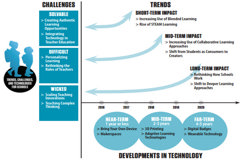
NMC Horizon Report
This report profiles the trends and key technologies and practices shaping the future of teaching and learning, and envisions a number of scenarios for that future. It is based on the perspectives and expertise of a global panel of leaders from across the higher education landscape.
-
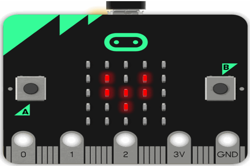
The Micro:bit Matters
In this article, Gary Stager introduces and explains the BBC micro:bit. He discusses pros and cons of the device, prices, compatible programs to use with it, resources to help understand the Micro:bit and other technological devices on the market.
-
The Big Book of Computing Pedagogy
This guide focuses on approaches to teaching computing in the classroom, and includes pedagogically themed articles. It is structured around twelve pedagogical principles, originally developed by the Raspberry Pi Foundation for the National Centre for Computing Education in England.
-
Why kids still need to learn to code in the age of AI
This report put forward evidence that even in a world where AI can generate code, we will need skilled human programmers who can think critically, solve problems, and make ethical decisions. It puts the case forward that young people need to learn to code because it is the most effective way for them to develop the mental models and fluency to become skilled human programmers.
-
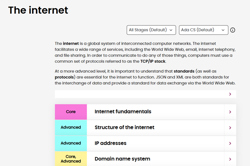
The internet
This comprehensive online guide, provides a background to the fundamentals of the internet. This topic has information about IP addresses, Domain Name System (DNS) and the common set of protocols referred to as the TCP/IP stack.