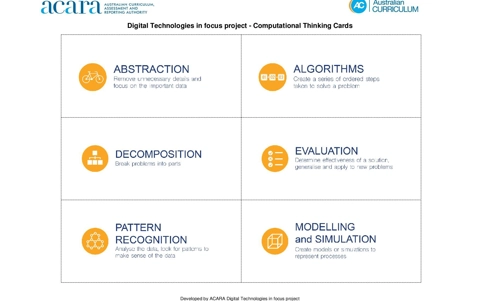
Computational thinking cut out cards
A set of printable cards that give a definition of six aspects of computational thinking.
Additional details
| Year band(s) | Foundation, 1-2, 3-4, 5-6, 7-8 |
|---|---|
| Content type | Lesson ideas |
| Format | Document |
| Core and overarching concepts | Computational thinking |
| Keywords | DTIF, DTiF, dtif, ACARA |
| Organisation | Australian Government Department of Education and Training |
| Copyright | Australian Government Department of Education and Training, CC BY 4.0 |
Related resources
-

Computational thinking in practice F-2 (Parent and teacher activity cards)
A set of printable cards that give simple activity ideas for parents and teachers on each of the six aspects of computational thinking.
-

Classroom ideas: Choose your own adventure (Years 3-6)
In Digital Technologies, students from Year 3 onwards should be planning and implementing projects that include branching (decision-making). Creating a ‘choose your own adventure’ story is an excellent way for students to design and implement a project that makes use of branching.
-

What is a digital system and how do digital systems help us? (Years F-2)
Digital systems are all around us. Providing students with opportunities to understand what digital systems are and how people use them for different purposes is very important in the early years of schooling.
-

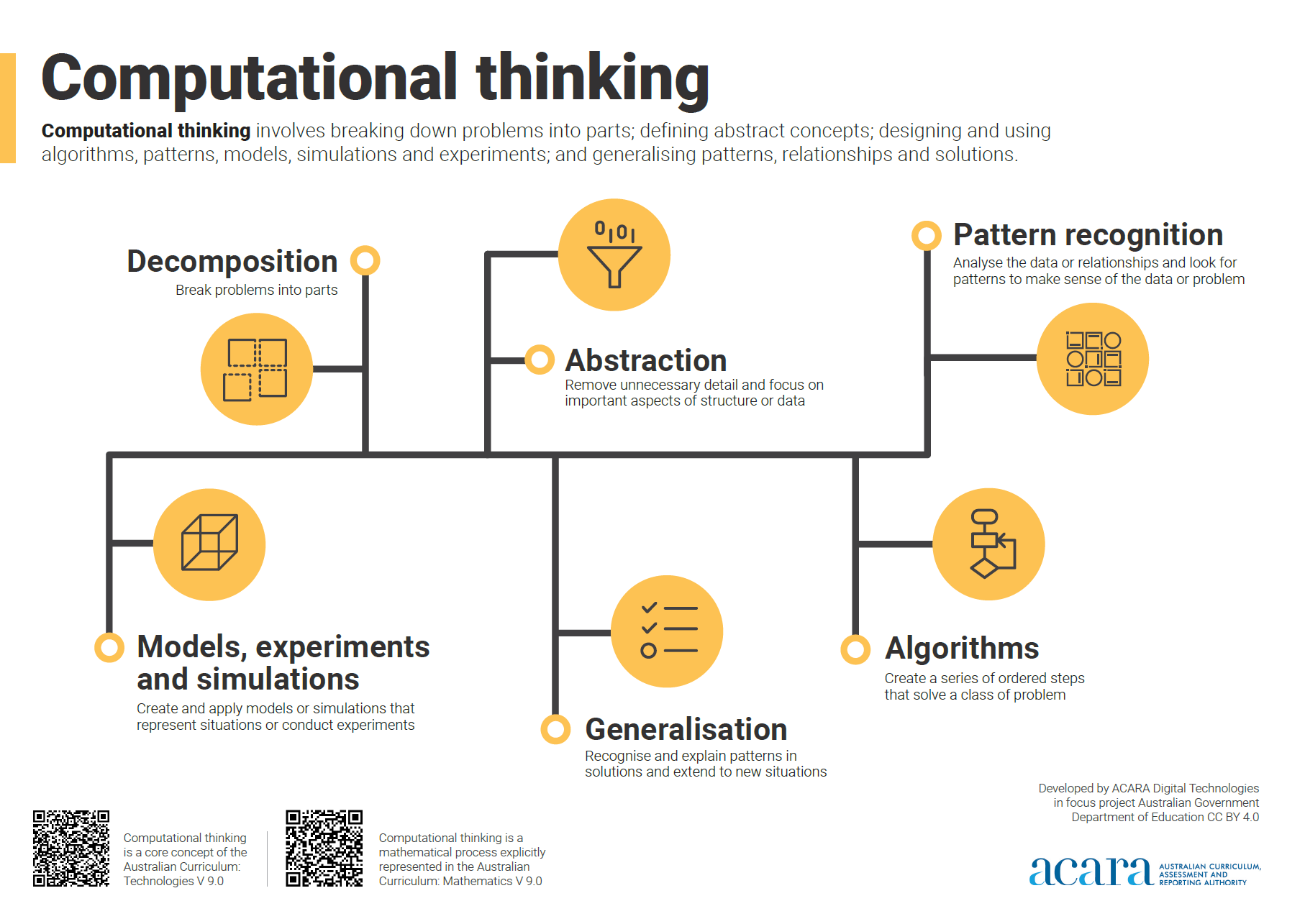
Computational thinking poster
A poster/infographic that gives a brief overview of the concepts related to computational thinking.
-
App Inventor EDU
Use this six week teaching program using a project based curriculum that allows students to explore the world of computer science through the creation of smartphone apps.
-
Acquiring data and representation: What’s in your lunchbox?
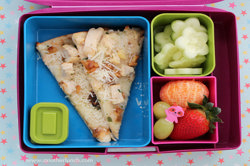
The type of fruits and vegetables in school lunchboxes or those eaten at crunch and sip or fruit break time can provide a good source of data for a classroom investigation.
-
Understanding digital systems (Years 3-4)
Simple ideas for learning about digital systems in the classroom.
-
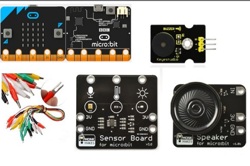
Classroom ideas: Micro:bit Environmental Measurement (visual and general-purpose programming) (Years 5-8)
Investigating environmental data with Micro:bits: This tutorial shows the coding needed for digital solutions of some environmental issues that can be created using pseudocode and visual programming.