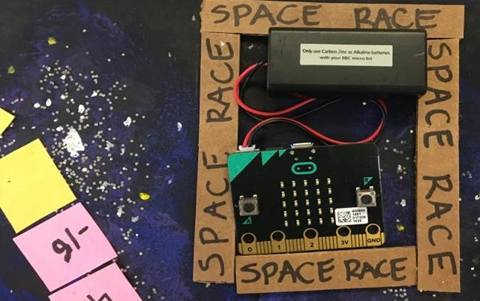
A 14 week Introduction to Computer Science course
The lessons follow a format of an introductory activity, an offline/unplugged activity, a micro:bit activity and a project.
Additional details
| Year band(s) | 5-6, 7-8 |
|---|---|
| Content type | Course or tutorial |
| Format | Web page |
| Core and overarching concepts | Algorithms, Implementation (programming), Computational thinking |
| Australian Curriculum Digital Technologies code(s) |
AC9TDI6P02
Design algorithms involving multiple alternatives (branching) and iteration
AC9TDI8P05
Design algorithms involving nested control structures and represent them using flowcharts and pseudocode
AC9TDI8P06
Trace algorithms to predict output for a given input and to identify errors |
| Technologies & Programming Languages | Electronic programming boards |
| Keywords | Programming, Visual based programming, BBC microbit, Algorithms, Variables, Iteration, Conditionals, Binary |
| Organisation | Microsoft MakeCode |
| Copyright | 2017 Microsoft. May be subject to Copyright Act statutory licence. |
Related resources
-

Crack the code - Technology Mandatory
A unit of work that develops knowledge, skills and understanding of coding
-

Python language
Students develop and implement digital solutions using Python programming language through applying data types and control structures.
-

Emerging technologies
Students follow a problem-solving process to develop an idea for applying emerging technologies to improve existing digital systems.
-

Codecademy
This site provides tutorials on web design tools. Requires free registration.
-

code.org
Code.org provides courses for F-12 year levels to increase knowledge in computer science. Free log in enables access to resources and more functionality.
-

Chatbot
Learn how to program a character that can talk to you! A character like that is called a chat robot, or chatbot.
-

Archery
Create an archery game, in which you have to shoot arrows as close to the bullseye as you can.
-

Ada's Poetry Generator
Learn how to program your own poetry generator! This will involve using variables, lists and repeat blocks.